The KURB report is the first of its kind and is a continuation of our goal to harmonize the ever-changing designer resale ecosystem. It is created to both illustrate the depth of data that lives inside the KURB engine as well as interpret and communicate it with those fascinated by the rapid development of the fashion industry. So, whether you're simply a curious layperson or a weathered designer veteran, this report will provide interesting and exciting data no matter where you find yourself on this spectrum.
If you follow fashion even recreationally, it'll be no news that the archival industry has been growing rapidly over the past years. In numbers, it reached $200 billion by the end of 2024 and has an annual growth of around 15% globally. Additionally, it's growing 4 times faster than traditional fashion retail. We're living in exciting times and these statistics point at a massive societal shift in sentiment towards fashion. However, at KURB, we're not interested in surface-level numbers, we're nerds who've lived and breathed designer fashion for more than a decade. In other words, we're all about depth, and providing the capacity to find the best and most interesting clothes that have been made around the world. With this also comes the acute awareness that there's a lot more to know about this ecosystem that meets most peoples' eyes. And we want to bring it to you.

For those new to KURB, we bring together the totality of global designer resale market onto one platform. Knowing that the ecosystem is complex, we made the decision to divide the types of resale platforms into four categories: Marketplaces (Grailed, Mercari, TheRealReal, Vestiaire Collective), Chains (2ndStreet, Joli Closet, Turnabout, Fashion Pile, Justin Reed, Dolce Vita Hub), independent stores (Driew, Marcosqrd, Archive Reloaded, SEK, Blind Date, Moss Consignment), Auction Houses (Catawiki, Bonhams, Invaluable). For those more visually inclined we made a (entirely handmade) rendition of the KURBiverse above. For this report Auction Houses have been omitted because of the paucity and uniqueness of their stock. However, this may change in the future! All the tables and plots are interactive so please let your curiosity run wild.
BIGGEST MOVEMENTS
greatest shifts in 2026-Q1 vs 2025-Q4
GROWERS
| # | BRAND | CHANGE |
|---|---|---|
| 1 | Yoshiyuki Konishi | +90.5% |
| 2 | Attachment | +49% |
| 3 | Veronique Branquinho | +46.1% |
| 4 | ssstein | +29.2% |
| 5 | Hermes | +27.2% |
| 6 | Final Home | +24% |
| 7 | Still by Hand | +23.8% |
| 8 | If Six Was Nine | +23.8% |
| 9 | Lad Musician | +21.8% |
| 10 | Chopova Lowena | +21% |
SHRINKERS
| # | BRAND | CHANGE |
|---|---|---|
| 1 | A.P.C. | -48.4% |
| 2 | Marine Serre | -24.2% |
| 3 | Dolce & Gabbana | -16% |
| 4 | Carol Christian Poell | -15.9% |
| 5 | Atsuro Tayama | -15.4% |
| 6 | Nigel Cabourn | -14.8% |
| 7 | Christopher Nemeth | -14.7% |
| 8 | Balmain | -14.7% |
| 9 | Shellac | -14.7% |
| 10 | Keita Maruyama | -14.6% |
The movement of time and the oscillating nature of the cultural zeitgeist always brings both winners and losers. This is especially true for fashion, and the archival designer space is not immune to it either. The volatility of the space also renders a relatively small time-window of three months relevant and worthy of consideration. In this graph above you'll be able to see which brands moved the most in the last quarter.
What this data uniquely demonstrate is the decoupling of the archival market from the retail market — almost as if they adhere to their own trend cycles. We can see this phenomena with how discontinued brands like Yoshiyuki Konishi, Veronique Branquinho, and Final Home occupy such dominance in both price and volume growth over this quarter. In contrast brands who have been ever present in the fashion Zeitgeist like A.P.C, Dolce & Gabbana, and Balmain are shrinking in price. It's also remarkable to see cult brands, like Carol Christian Poell increase in volume while decrease in price. Taken together we can see that the dynamics which underlie the archival market are isolated from those which impact contemporary fashion.
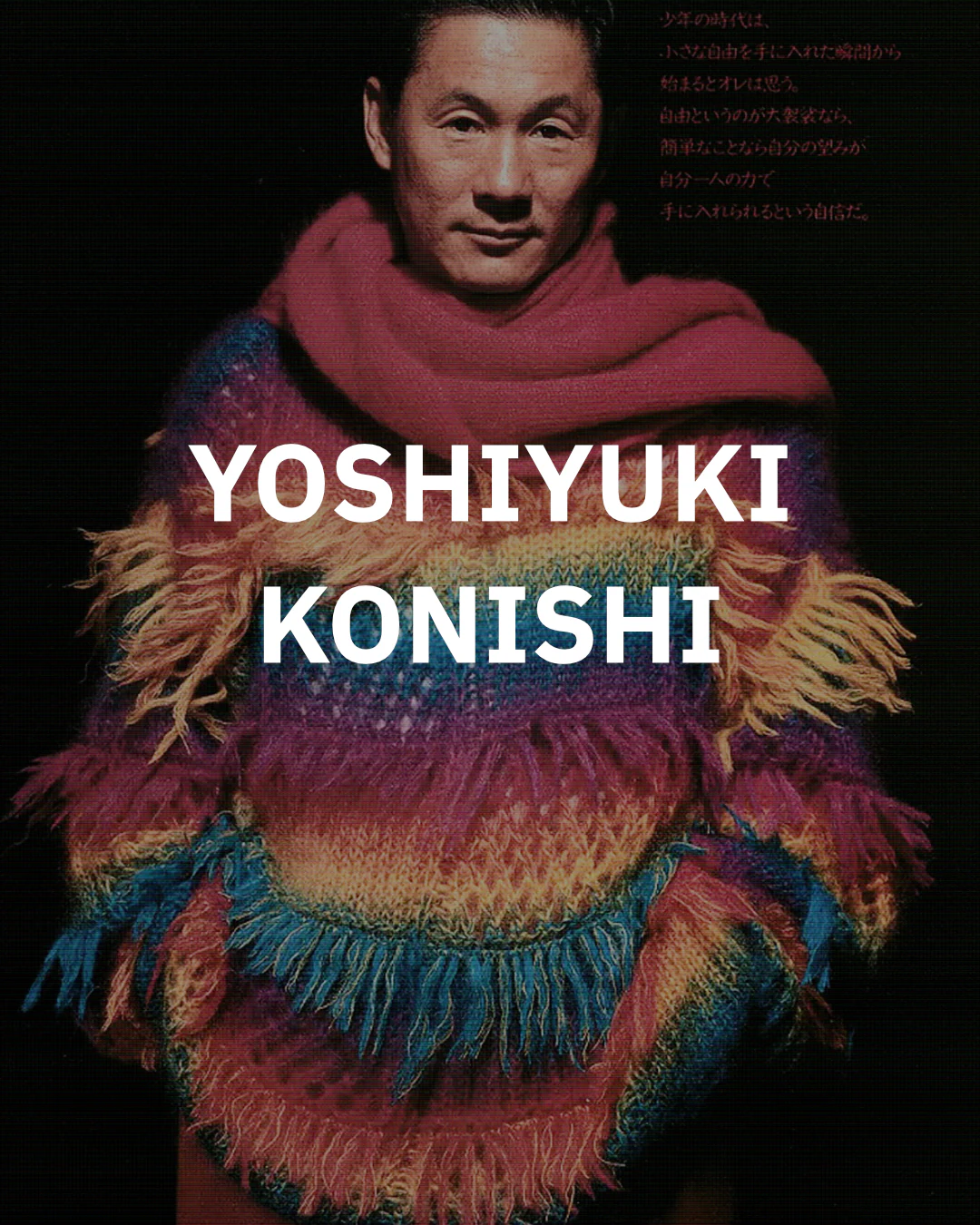
YOSHIYUKI KONISHI
Yoshiyuki Konishi's is a Japanese designer whose career reached its zenith during the 80's and 90's. His clothing could be seen on Japanese cultural icons like Takeshi Kitano and Shinjiro Tanimura along with international stars like Elton John and Snoop Dog. Konishi offered a range of products but it's his exceptional knitwear, produced under the long discontinued Ficce Uomo that have been most coveted. His designs act as a testament to his mastery of the craft, often displaying intricate patterns that at first glance appear as a kaleidoscope of color but upon closer examination present a meticulous web of knitting application. The best examples of his work can be seen in the book "Takeshi Beat Wears Knits of Yoshiyuki Konishi", 1992 and throughout the archival designer market. For many years now there has been a trove of affordable Yoshiyuki Konishi sprawled across Japanese marketplaces, likely due to its meteoric success in Japan along with the base being there. It's exciting to see this return to appreciating the methodology for craft in Fashion, and Yoshiyuki Konishi precisely offers that intersect between impeccable design and expert craftsmanship. Our report showing an almost 100% increase in median price for his clothing indicates a resurgence of interest for his work across archival markets. Unfortunately, it was too soon before I decided to buy any myself, although hopefully not too late.
Shop Yoshiyuki KonishiVERONIQUE BRANQUINHO
Veronique Branquinho, best known for the womenswear that won critics’ hearts at her 1998 debut, has re-emerged on the radar nearly a decade after her label’s 2017 closure. While her run in menswear was short-lived, the archival market is currently obsessed with it. But where is this resurgence coming from? Unlike her contemporaries who leaned into loud subculture references, Branquinho’s work remained a quiet mystery, opting for a balance of femininity and masculinity that avoided the trap of chasing trends. Her appeal lies in high-quality, wearable staples, but the market suggests that buyers have very specific demands. With the Spring Summer 2004, “Lonely Café Racer” recently selling for $2,000 on Grailed, we are seeing a rush to canonize the next great “lost” designer. While online influencers provided the initial spark, it’s the enduring Antwerp mythology, the market for her contemporaries becoming prohibitively expensive, and the attention to her Men’s Autumn Winter 2004 collection. Which blends her talent with the eerie, aesthetic of the Red Room from the television series: Twin Peaks. It has created an digestible story that sellers can easily market for her menswear. While hallmark leathers and outerwear reach astronomical prices, the true spirit of the brand remains in its quality and its accessibility to those who know where to look, for fans of razor-sharp, classic tailoring we hope those new to the brand will enjoy.
Shop Veronique Branquinho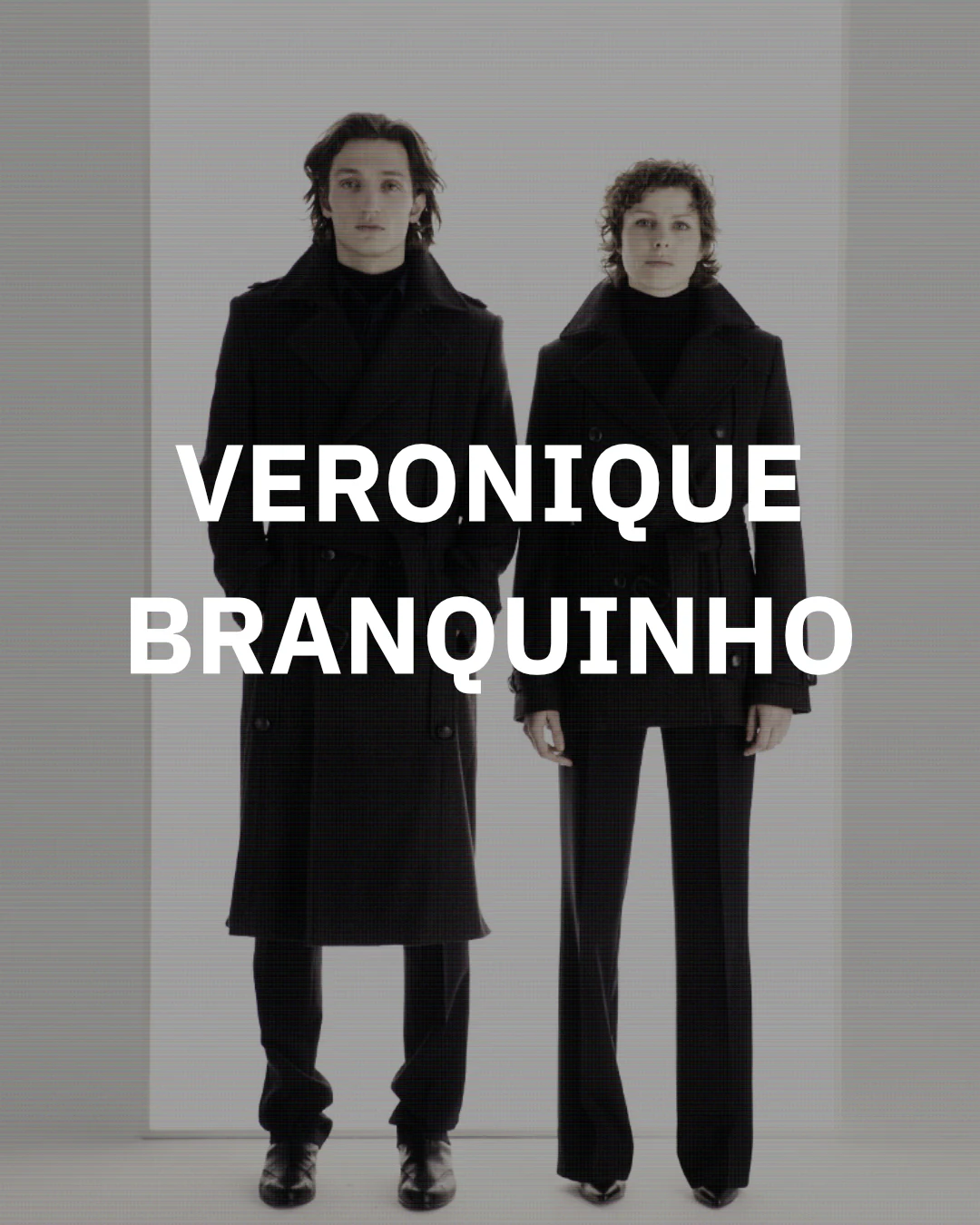
SSSTEIN
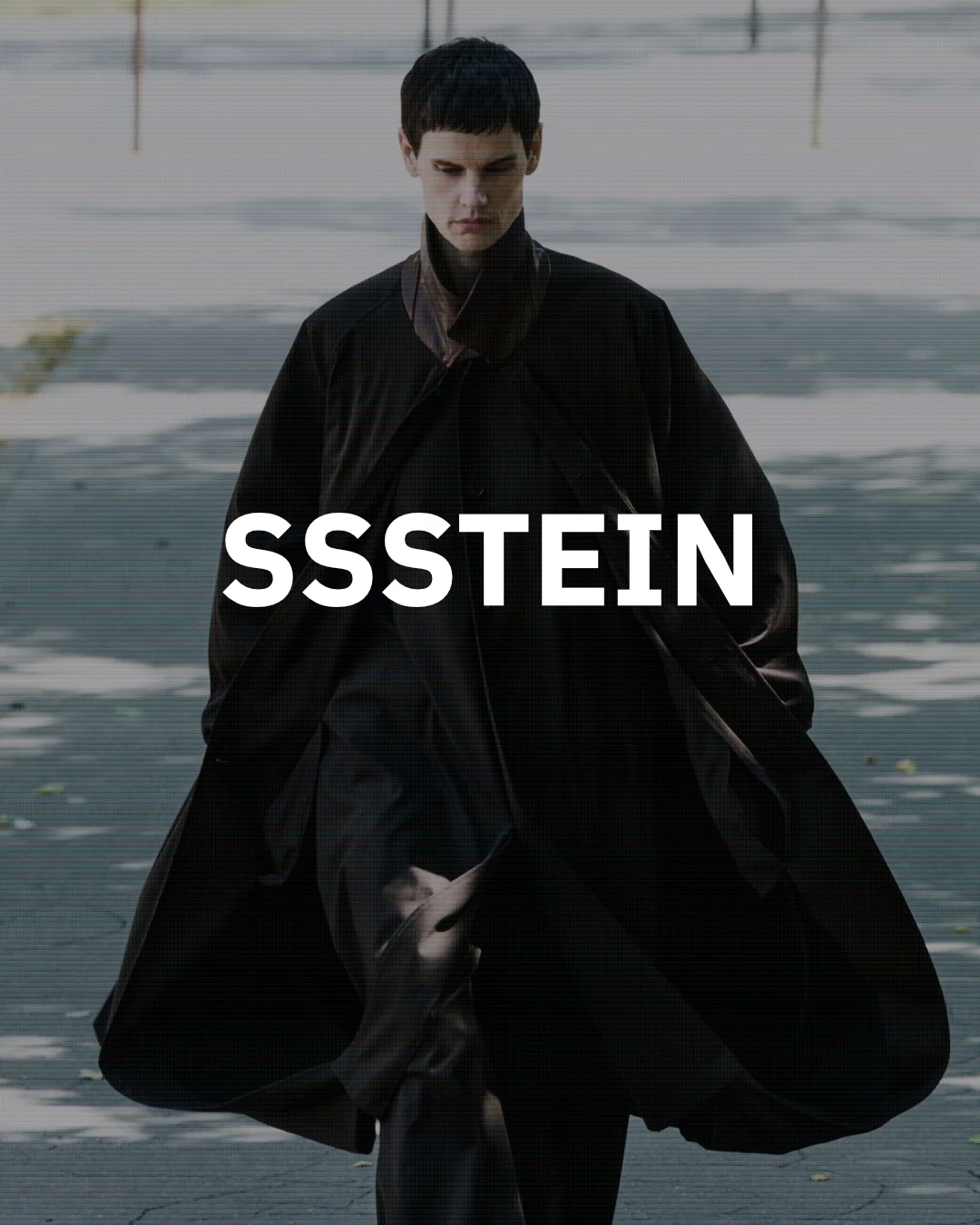
Taking a quick peak at the runway shows of Ssstein and it's easy to lump it together with the Lemaires, Auralees and the The Rows of this world. Indeed, to the naked eye, they look like they share the same sartorial universe. But after having followed the fashion world for long enough, you'll eventually learn to look past contrived originality; sometimes it isn't always about doing something new, but more so about continuation, and the perseverance in expanding what already is. Despite this, self-thought designer Kiichirō Asakawa, isn't interested in scale, and if this same timidity isn't reflected in the clothes and the moods that permeate the runway shows, it can be directly observed in the name, where the three S's reference the roman symbol of silence. Don't expect the clothes to scream for your attention, instead be prepared to have them test the dwindling human faculties of patience and attention in a world brimming with noise and overstimulation. Ssstein demonstrates that what may appear simple on first glance may not be so; the complexity reveals itself on closer inspection, and the beauty of the fluid silhouettes, muted colors and interplay between fabrics is meant to deepen with time. In other words, a Ssstein garment confronts the pervasive logic of instant gratification so inherent to the fashion system, and is meant to stay with you for longer than a trend cycle. Despite the "anti-position" it asserts within fashion, the label has seen growth over the past years, with a revenue reaching $6M in under a decade, being stocked by the likes of Selfridges, Ssense and Très Bien and having debuted at Paris Fashion Week in 2026. To conclude, things are looking up for Ssstein, and maybe we shouldn't be surprised by the parallel tendency on the archival market.
Shop SssteinTOP VENDORS
Largest product volume for brands and categories.
MARKETPLACES
1eBay1,523
2Grailed933
3Mercari (JP)931
4Yahoo Auctions558
5Fril509
6Bunjang406
7Vestiaire Collective372
8Fruits Family348
9Mercari (Global)304
CHAINS
12ndstreet225
2Joli Closet122
3Kindal79
4Rinkan75
5Feelway68
6Trefac60
7Ragtag33
8Dolce Vita Hub29
92ndstreetUSA26
10Bazzstore13
INDEPENDENT STORES
1NEUZWEI21
2I MISS YOU MAN8
3Sado Room5
4marcosqrd4
5Archive Reloaded4
6Alex Maxamenko4
7SEK3
8HULA3
9Sevenstar Clothing3
10no38 Dunville3
In this table, we've harnessed KURB's vast repository of data to showcase the top vendors for a selected set of designers and the respective garment categories. Navigate to the top part of the table to change the parameters. The level of presence among brands differs across markets, but despite this, eBay, Mercari (JP) and Grailed tend to contest for the top marketplace spot, while with chains stores there's no clear pattern other than 2ndStreet often finding itself at the top.
This table can also be used to identify what kind of brands and niches the independent stores specialise in. For example, we can see that L'Obscur offers the most Ann Demeulemeester, whilst if you're a Carol Christian Poell fan, Driew and Archived might be stores you want to keep on your radar. At the same time, we can see that brands like Chrome Hearts, Issey Miyake and Maison Margiela have a strong presence across a lot of independent stores.
BEST DEALS
Lowest median prices across tracked platforms.
MARKETPLACES
1Mai App$49
2Finn$52
3Thrift+$53
4Thredup$66
5Hard Off$72
6Zozo Used$83
7Depop$94
8Tori$97
9Sellpy$98
10whatnot$100
CHAINS
1Bazzstore$56
2Ragtag$94
3Mine & Yours$119
4Trefac$137
5ALLU$198
6Kindal$211
7Lukes Store$225
8Swop$236
92ndstreet$252
10Rinkan$258
INDEPENDENT STORES
1I MISS YOU MAN$114
2Sado Room$192
3NEUZWEI$287
The designer atlas demonstrates the volume and median price per country for the selected designer and category, providing a quick sneak-peek into which designers are trending in specific parts of the world. As with the designers, we decided to limit the amount of countries to those deemed most involved within fashion and resale. If you're curious about where in the world you can find the best deals, flick to the median price tab. If you're more of a list person, try out the table tab!
DESIGNER ATLAS
A few key geographic findings stand out. Across the select brands, Canada consistently offers a lower median price than the US — likely attributed to tariff changes. Within Europe it's interesting to see that central Europe commands both the highest volume of archival designer and the highest median price compared to the Nordic's or Eastern Europe. As has been true for a long time now, the Asian market generally reigns supreme in both volume and lowest median price across the board.
This report symbolizes a mere fraction of what can be done with the KURB engine. The fragmented and continuously growing archival designer market is hard to make sense of, and it demands a system of interpretation. Though at a surface level, KURB appears as a simple search engine, this platform's ambition is to harmonize the scattered nature of the ecosystem and translate the chaos into a comprehensible entity for anyone interested in fashion. For this reason, this report is also a call to those who engage in resale fashion professionally; if you're interested in tailored and in-depth statistics, be it on specific designers, markets, or anything in between, don't hesitate to contact us.
WANT YOUR OWN ANALYTICS?
We build custom analytics tailored to your needs.
Specific designers, markets, price trends, arbitrage opportunities, or anything in between.
Get in touch and we'll make it happen.