We’re excited to announce our second ever KURB report, seeking to chart the movements of the designer resale ecosystem as accurately as possible and provide you with rich sets of data that can be used to your heart's content, whether you’re in it professionally or for love of the game. With each iteration of our quarterly reports, we seek to make improvements and create richer analytics. Meanwhile, we’re reshuffling the set of brands used for the analysis with each report. Last time, the brands included Rick Owens, Miu Miu and Maison Margiela but for Q2 those were replaced with industry heavy hitters like Hermes, Ganni and TOTEME.
Before we delve into the report, we want to provide a little refresher on what KURB does. The platform aims to harmonize the entire designer resale ecosystem into one place, providing a seamless browsing experience for anyone interested in finding the garments they love. The resale landscape is in continuous flux and grows at an accelerating pace, and anyone who follows it even casually knows it isn’t just Vestiaire, TheRealReal and Grailed anymore. In fact, KURB hosts 800 platforms scattered around the world, from small Independent Stores to large Marketplaces, with more are joining the ecosystem constantly. As individuals who’ve inhabited the fashion resale space for almost two decades, we’re in a unique position to see how it all started, how it grew into what it is today, and therefore also where it may be headed. The on-going efforts to harness the changing nature of fashion and render it into an intelligible shape is what both KURB and specifically our quarterly reports symbolize.
BIGGEST MOVEMENTS
greatest shifts in 2026-Q2 vs 2026-Q1
GROWERS
| # | BRAND | CHANGE |
|---|---|---|
| 1 | KHAITE | +106.4% |
| 2 | Enfants Riches Déprimés | +98.5% |
| 3 | Geoffrey B. Small | +95.3% |
| 4 | Blackmeans | +60.8% |
| 5 | Still by Hand | +55.1% |
| 6 | Song for the Mute | +51.9% |
| 7 | 20471120 | +45.9% |
| 8 | Cinzia Araia | +43.4% |
| 9 | Final Home | +42.9% |
| 10 | Atsuro Tayama | +42.5% |
SHRINKERS
| # | BRAND | CHANGE |
|---|---|---|
| 1 | Kiyoko takase | -48.4% |
| 2 | Yoshiki Hishinuma | -43.2% |
| 3 | Moncler | -39.1% |
| 4 | ssstein | -36.3% |
| 5 | Digawel | -32.8% |
| 6 | clef de sol | -29.6% |
| 7 | Maison Kitsune | -28.3% |
| 8 | Junya Watanabe eYe | -27.6% |
| 9 | Klättermusen | -27.6% |
| 10 | Alice Auaa | -26.4% |
Many of last reports biggest growers have failed to make the top 10 this quarter, and some like ssstein have become among the greatest shrinkers- highlighting the trend-sensitivity of the archival designer market. What has stayed true are the unique brands which have exploded in price this quarter: Enfants Riches Deprimés has climbed the ranks harnessing a more refined yet challenging design offering while still being true to their punk roots- cementing themselves as a brand with cultural longevity as demonstrated by their archival traction. Song for the Mute has been on my radar for over a decade. We’ve been following them from their humble Australian roots and to now see them showing at PFW is incredible to see. Still by Hand and Final Home both grew during Q1 2026 and continue to do so, though neither have topped the tables. It's great to see these brands continue to be desirable within the archival designer economy.
One explanation for the continual growth of Final Home can be attributed to their increased scarcity, as indicated by being the greatest volume shrinker this quarter. Though the relationship is not always inversely related as we see brands like Yoshiki Hishinuma being a volume shrink in both price and volume. Brands we added last quarter like Veilance, Bella Freud and Cecilie Bahnsen have each had over 100% increase in volume compared to last quarter. However this all just scratches the surface, read on to get the full insights on how the archival designer market shifted over Q2-2026.

ENFANTS RICHES DÉPRIMÉS
Enfants Riches Déprimés has always positioned itself less as a fashion label than as an art object with a retail component. Since Henri Alexander Levy began hand painting jackets in his LA studio, ERD has built its identity around scarcity, provocation, and extreme pricing, with tees approaching four figures and leather pieces reaching well into five. Recent gestures, from a Spring/Summer 2025 presentation at Sotheby’s Paris to Marilyn Manson opening Fall/Winter 2026 and a limited photo book with Vincent Gallo shot by Terry Richardson, reflect the brand’s increasingly dense fusion of punk, art, celebrity, and luxury spectacle. (We are reaching nauseating levels of ironic hacky-sacking! E-gad!)
ERD’s rise is tied to a broader acceptance of gothic luxury, a category significantly shaped by Chrome Hearts. Both Los Angeles brands transform outsider aesthetics, handcrafted production, and countercultural references into collectible luxury objects. As Chrome Hearts has helped legitimize biker leather, gothic iconography, and anti-fashion craftsmanship within the collector market, ERD benefits from the same cultural framework. Our data reflects growing demand among collectors who increasingly view ERD pieces not simply as clothing, but as scarce cultural artifacts. The brands are not competitors so much as co-authors of luxury’s ongoing rehabilitation of the underground.
Shop Enfants Riches DéprimésGEOFFREY B. SMALL
Among the greatest Style Zeitgeist Woke-Posters of all time. Some know him as the fashion boomer final boss who hounds double digit following finsta’s to stop tagging him, others as the hand who holds fabric glitter-pens to sign dead-stock jacket lining, and to us he is the man that stands at the top of archival designer trend analytics. Who would have thought that spending countless hours in the trenches of the Style Zeitgeist forum post editor for years on end would yield such supremacy. Not a single carbon source involved in a jacket button un-cited, excavating the bowels of bone shaving techniques no one even knew existed. Hems you would never even know of- finished, silks from extinct worms- spun, french tailoring traditions thought forgotten- remembered. And every forum post, read by yours truly. However all this labour was not for nothing, Geoffrey B. Small truly does produce some of the most beautiful jackets there are and his dedication to the craft is not a marketing-ploy. In this era of mass and ass fashion production his designs stand as a testament to real luxury. Like a migrating salmon he plows against the current- in both spirit and mind. There’s really nothing I can say about his work that hasn’t already been said. Just know- with the Geoffrey B. Small archival market evolving as it is, the time to strike was yesterday.
Shop Geoffrey B. Small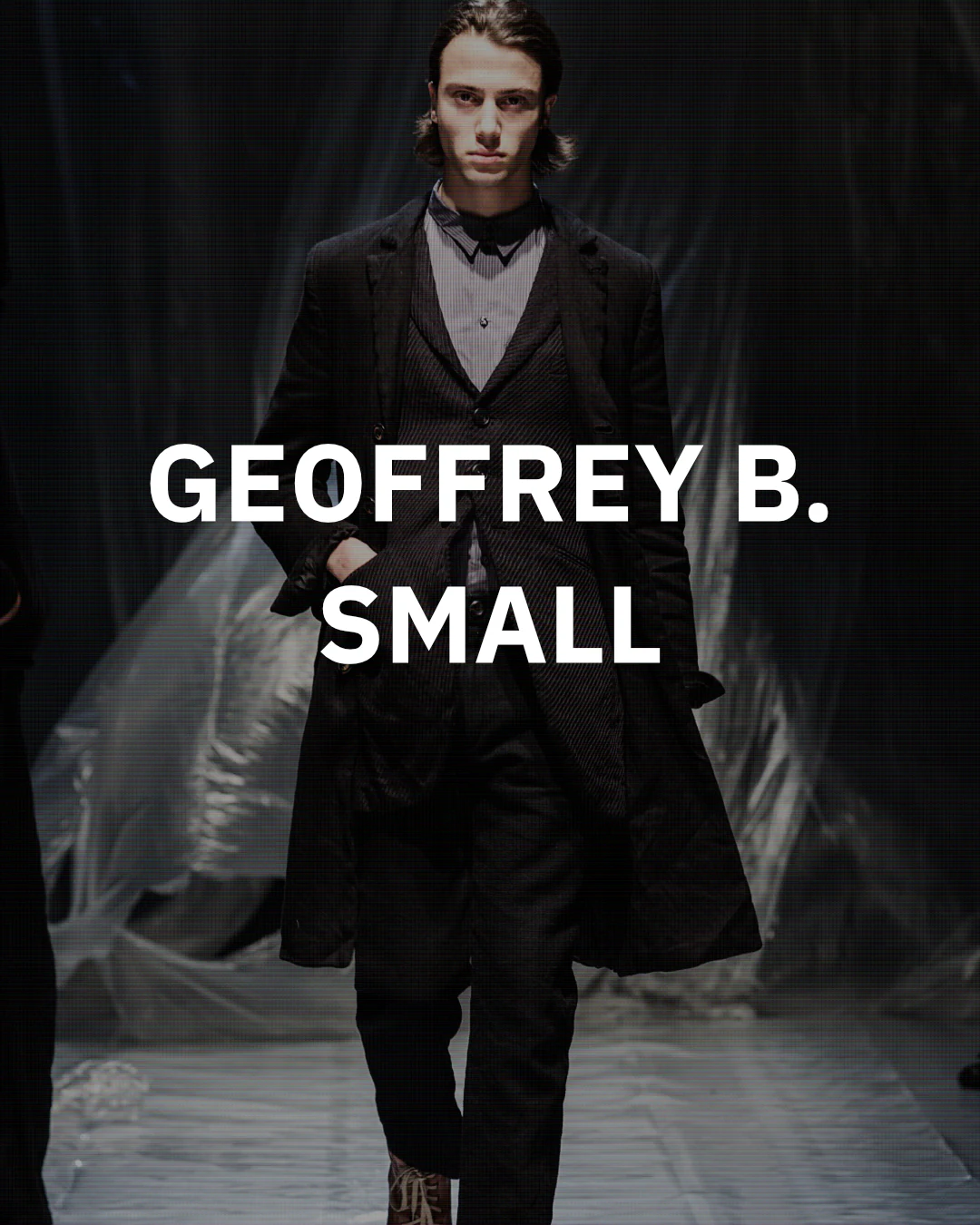
BOTTEGA VENETA
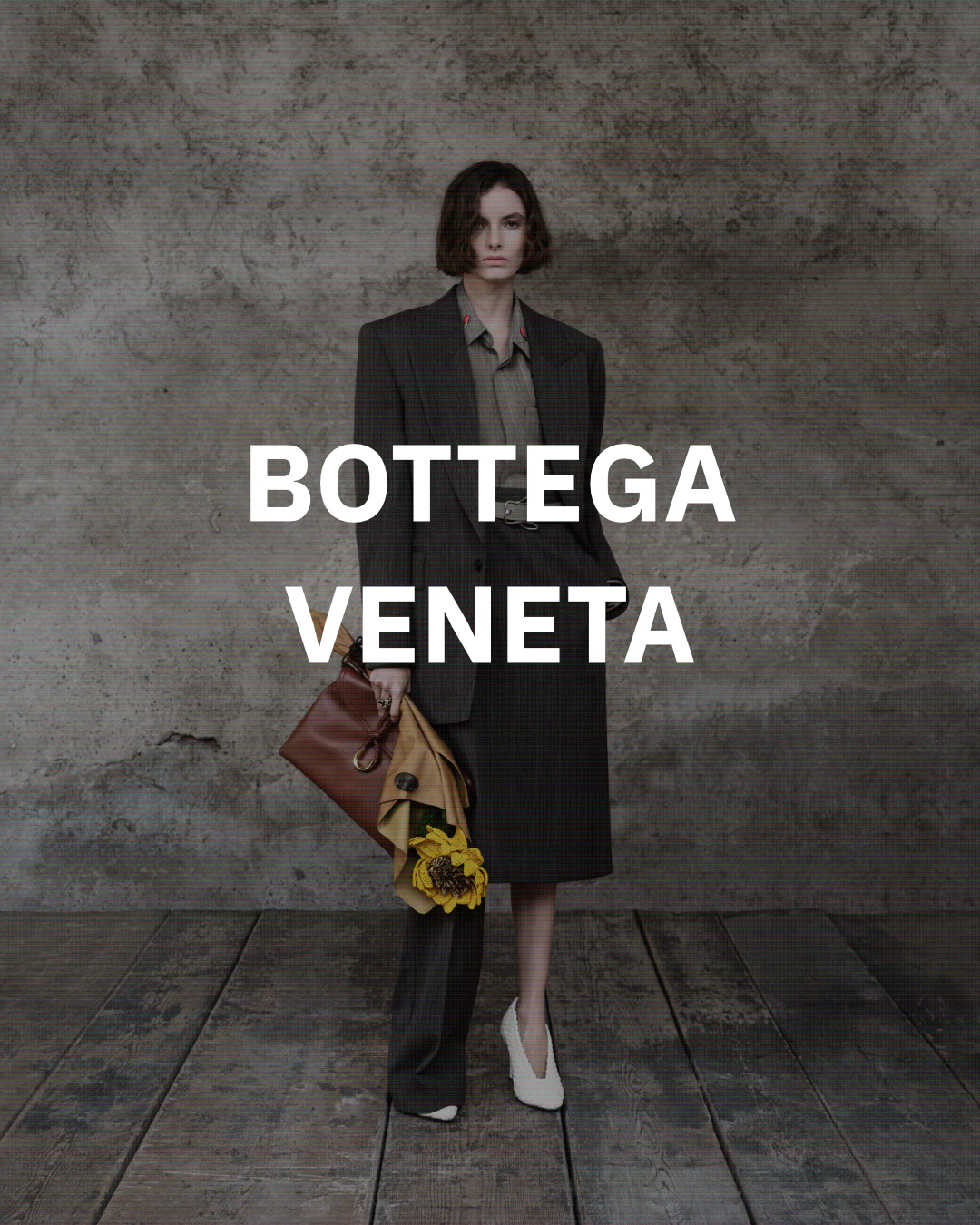
Bottega Veneta, literally meaning “Venetian Workshop”, is one of the few among the array of traditional fashion houses whose name isn’t the name of its founder. The house was founded in 1966 and set itself apart with a focus on artisanal leatherworking. Out of this spawned a unique weaving technique that remains the house’s signature to this day: the “Intrecciato”. Since the 1970s, the house has embraced a philosophy that remains at their core today: “when your own initials are enough”. In other words, true luxury doesn’t need a logo; the craftsmanship coupled with the confidence of the wearer should speak for itself. In 2001, Gucci Group acquired Bottega Veneta for $156 million in 2001 and appointed Tomas Maier, who revived the traditional leatherworking aspect of the house while breathing fresh air into its ready-to-wear. But it’s really since the appointment of Daniel Lee when the world of Bottega gained prominence in the modern zeitgeist, staying true to its philosophy of craftsmanship and applying it to the house’s ready-to-wear while expanding the accessories line with items such as The Pouch, The Cassette and The Jodie. This period also saw the introduction of Bottega Green which remains a signature for the house today. In 2021, Mathieu Blazy took over the torch and further elevated the house’s artistic innovation and was known for including the craftspeople into the creative process. His dedication to craft was perhaps best seen in the trompe-l-oeil leather technique, which made leather look like everyday fabrics, demonstrating the skill of Bottega’s artisans. He also introduced hugely successful bags to the already-rich offering, including The Sardine and The Andiamo (meaning “let’s go”). Since 2025, Louise Trotter sits at the helm of the house, who, though less theatrical than Blazy, has shown to remain respectful to Bottega’s DNA while introducing softer tailoring and a “quieter sensibility”. Overall, Bottega Veneta is one of the healthiest brands in luxury at the moment; many analysts regard it as Kering’s strongest-performing house in the portfolio, with a revenue that reached €1.7 billion in 2025. There are few luxury brands of this scale that have managed to retain — and even expand on — its artistic and artisanal integrity while seeing financial growth without compromising its cultural capital. The only house that arguably has found a similar working formula is Hermès. Bottega Veneta is proof that many people crave craftsmanship and artistic innovation over one-off branding gimmicks and the logo-mania that have dominated the industry for decades. Time will tell if the house can succeed in expanding its vibrant world without abandoning what made it great in the first place.
Shop Bottega VenetaTOP VENDORS
Largest product volume for brands and categories.
MARKETPLACES
1Mercari (JP)254,316
2Grailed129,149
3eBay46,114
4The RealReal28,083
5Poshmark25,466
6Carousell19,298
7Bunjang18,273
8Vestiaire Collective16,430
9Yahoo Auctions13,174
CHAINS
1Feelway14,170
2LUX LAIR9,846
3Fashion Pile8,089
4ALLU6,155
52ndstreet6,116
6REBAG5,883
7Joli Closet3,787
8Rakuten2,261
9Luxury Promise2,241
10Kindal2,113
INDEPENDENT STORES
1Vintage Lux743
2Alex Maxamenko681
3The Vintage Bar584
4Archive Factory570
5Sellier504
6Hana Vintage410
7HULA362
8Sevenstar Clothing274
9CONSUMED233
10Current Boutique199
It’s impressive that Mercari (JP), being a one nation Marketplace, still manages to top the charts in terms of value compared to all other more international peer-to-peer platforms. This speaks to the more active circular economy in Japan and a longer history of an active archival designer market, in turn nurturing wider participation. Their volume is hotly followed by Grailed.
The Chain stores tell a much more complex story with Korean behemoth Feelway leading the way- although they operate somewhere between a Vestiaire Collective and a Chain they also demonstrate a processing power that competes with Vestiaire Collective. While at the Independent Store level vendors like Vintage Lux and Alex Maxamenko contend with Chains in terms of their volume throughput. When doing the daily finds it’s hard not to consistently add products from these stores as they seem to be perpetually dropping new items.
When cycling through different brands clear trends form between different stores depending on the store categories. Among Marketplaces the greatest volume is found for designers who are domestic to the specific Marketplace (e.g. Mercari (JP) and Yahoo Auctions for Japanese designers, Vestiaire for heritage European designers), while for Independent Stores it’s a bit more nuanced. Independent Stores typically specialize in a particular brand, or a collection of brands formulating a genre. For example an Independent Store that stocks a high volume of Hermes is also likely to stock a lot of other bag-dominated brands like Chanel, Celine, Kate Spade. Look forward to a forthcoming Blog where we map out different store genres based on their curation.
BEST DEALS
Lowest median prices across tracked platforms.
MARKETPLACES
1Curtsy$39
2bought$48
3Depop$49
4Tradera$51
5Momox Fashion$54
6Thrifted$55
7Finn$57
8OLX$74
9Thrift+$74
10Plick$80
CHAINS
1Rakuten$144
22ndstreet$195
3About Glamour$198
4Bazzstore$200
5Kindal$215
6Second Wave Vintage$215
7Swop$226
8Trefac$230
9Swap Boutique$237
10BIVIO$244
INDEPENDENT STORES
1Ambroeus Milano$38
2Stock Lab$41
3Dla Dushy Vintage$45
4CHLOE VINTAGE$78
51036$80
6Vintage of Amsterdam$81
7Rokit$92
8PRAG COPENHAGEN$93
9Out & Back$95
10Labels Resale Botique$100
The stores with the best deals vary depending on which brand you’re looking for and among which vendor category. In general the best deals are found on Marketplaces and among Marketplaces it tends to be the less well known like Curtsy, OLX, Tradera, Wallapop, Carousell (to name a few) that offer the best deals for the popular brands. While this is a general rule, our data shows that the Store optimization should be brand and category specific, so there’s a bit of research that needs to go into hunting down the best deals.
Chains tell a different story. Across the board Japanese Chains tend to be the best go-to source for archival designer pieces. They do routine drops which if you can organize your schedule around can yield incredible items for reasonable prices. What’s remarkable are stores like Kindal, Bazzstore and Rinkan have offered these specialized drop opportunities for decades, speaking to the strength of the Japanese resale economy.
Finding the best deals across Independent Stores is a bit more complex. For a specific brand they generally offer the highest prices in return for a more dedicated consumer experience. Bernhard Willhelm paints a clear picture where from Marketplace to Independent Store there is a clear increase in the prices they command.
DESIGNER ATLAS
The Atlas offers an interesting overview of the market and how the volume and median price of specific brands vary between different countries. However a more clearer picture is shown by switching into the Table view and browsing through different selections.
Compared to our Q1 Report there have been dramatic updates to our collection. We now have some coverage of China thanks to Curator Eden along with more African and Oceanic countries. Overall our coverage has matured substantially but clearly Asian and the US still command the lion’s share of products entering the archival designer ecosystem. The Median price differences between regions is a bit more nuanced, where there is a clear optimization that can be done when searching for a particular brand. For example, while the great volume of Klattermusen is found in Japan, it offers far from the lowest median price. Interestingly Oceania seems like quite a disruptor in terms of offering the lowest median price for specific brands despite not presenting a large amount of volume.
This report symbolizes a mere fraction of what can be done with the KURB engine. The fragmented and continuously growing archival designer market is hard to make sense of, and it demands a system of interpretation. Though at a surface level, KURB appears as a simple search engine, this platform's ambition is to harmonize the scattered nature of the ecosystem and translate the chaos into a comprehensible entity for anyone interested in fashion. For this reason, this report is also a call to those who engage in resale fashion professionally; if you're interested in tailored and in-depth statistics, be it on specific designers, markets, or anything in between, don't hesitate to contact us.
WANT YOUR OWN ANALYTICS?
We build custom analytics tailored to your needs.
Specific designers, markets, price trends, arbitrage opportunities, or anything in between.
Get in touch and we'll make it happen.